
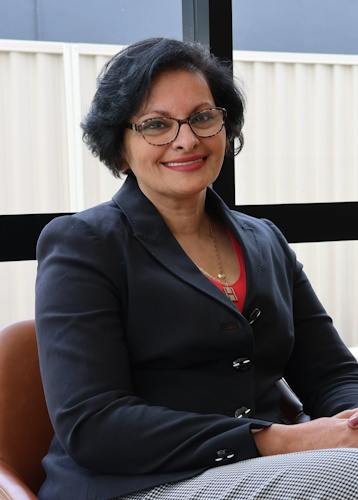
We sat down with Dr Talat Uppal, a Gynaecologist at Women’s Health Road in Frenchs Forest, Sydney, to discuss the integration of an ambient AI scribe into her clinic’s workflow. The tool operates in the background during consultations, automatically capturing and summarising doctor-patient conversations. It generates structured clinical notes and patient-facing action plans. In this interview, Dr Talat shares the key benefits, challenges, and impact the AI scribe has had in her practice – including the importance of reviewing the notes and staying informed through AI scribe resources.
What is the clinical problem that the digital scribe is trying to solve?
“The clinical problem we’re trying to solve is how to support women with abnormal periods. Heavy menstrual bleeding affects 1 in 4 reproductive age women with two-thirds of them suffering from iron deficiency as a result. This condition can significantly impact quality of life, yet it remains under-recognised and inadequately addressed.
As a secondary care provider, I often meet women who have endured these challenges for years. When I ask, ‘How long have you been dealing with this?’ they often reply, ‘Seven years.’ It’s disheartening to hear because many of these women do not face typical barriers to healthcare; they manage other aspects of their health well. So, then I’m left wondering “Why is their menstrual health literacy so poor, and why does it take so long for them to seek care?”.
The bigger picture for me wasn’t simply about finding an AI scribe. It was about seeking comprehensive solutions to support women and raise awareness about issues like abnormal menstrual bleeding. Through this journey, I realised that we needed to build a digital-based ecosystem – one that leverages sophisticated technology to empower women, enhance their health literacy, and provide more accessible pathways to care. The potential for digital tools to bridge gaps in education, streamline care processes, and ensure lasting patient engagement became clear. This approach could be key to addressing the needs of women who have been long underserved when it comes to menstrual health and related concerns.
Then we were invited by an AI scribe company to trial their software. After looking into it’s potential, I realised how it could enhance patient awareness and engagement through more structured consultations. Women navigating various treatment options – whether considering a hormonal IUD, oral Contraceptive Pill, or procedures such as an Endometrial Ablation or Hysterectomy – often face an overwhelming array of information, each choice accompanied by its own set of pros and cons.
The challenge is ensuring that patients can continue to process and retain this information after they leave the clinic to better support informed consent. The AI scribe not only supports me by capturing the consult in real-time, but it also generates a detailed patient note. This structured summary empowers patients to review their options, understand key points discussed, and feel more confident in making informed decisions long after the consultation has concluded. By capturing our conversations in a comprehensive and clear format, we provide patients with the tools they need to navigate their care journey effectively.”
Can you describe the system?
“This is an ambient scribe that works in the background to capture and summarise a consultation. It layers the conversation under structured headings and includes the discussed list of treatment options in the generated care plan. For example, I want screening for anaemia, and a plan for treatment if present to be prioritised in the documentation, and the scribe captures it in a way that makes this information easy to access.
After finishing the consult, we send the patients relevant educational content and can ask the scribe to generate a patient-facing action plan based on the discussions and management plan created during the visit. Patients can then access their personalised checklist and any test referrals, creating a more patient-focused experience and reducing the likelihood of misinformation or overlooked details.
Initially, the scribe was a standalone service not integrated with our practice management system. But we wanted and needed one unified digital ecosystem, a centralised source of truth, so we advocated for collaboration between both companies to partner. As a result, the scribe is now integrated into our patient management software, creating a seamless workflow.
We’ve used the scribe for just under a year now. Previously we used another AI solution that required a handheld device, but this ambient scribe has proven to be more efficient and less intrusive during examinations, making it easier to capture comprehensive information.”
What have been the greatest challenges from using scribes in your practice?
“The challenges initially were around training and adapting to a new product. We’re lucky that our admin team is very tech-savvy and when we’ve needed help or wanted changes, the scribe software support team has been responsive.
Occasionally we forget to start the recording and that can set us back as we haven’t written or captured any notes. This happens very rarely but we can usually reconstruct notes immediately after the consult. That’s one part where we are a bit vulnerable – also, if that technology fails, we are relying on it.
To ensure that the consultation notes highlight the key areas of conversations and sort this information into headings that I prefer, we needed to develop note templates. I wanted the template for Abnormal Uterine Bleeding (AUB) (based on the International FIGO AUB Classification) and Heavy Menstrual Bleeding (HMB) to include sections such as ‘Menstrual History’, ‘Investigations’, and ‘Treatment Plan’.
I also wanted the template to allow flexibility to include other patient details such as their social history. If the patient has told me their dog has died or their uncle is sick, I want to record that. These examples are not entirely medical, but they are important for the holistic journey of the person. At the beginning the template we had created meant that the scribe was only capturing the medical content. So, I contacted the team and said, “Look for us, if it is important for her to voice, it is important for the scribe to capture”. They then showed us how to customise our templates to make them more socially literate and sensitive, which has been invaluable for comprehensive patient care.”
Creating the templates was a challenge, as it can be time-consuming and requires some basic ‘coding’ to guide the AI. Fortunately, my amazing Practice Assistant, Sarah, took on the task of developing these templates based on my previous consult notes. With my guidance, she regularly updates them to reflect any necessary improvements. Sarah has been instrumental in building a comprehensive bank of templates, allowing us to select the most appropriate consultation type for each patient or visit. For example, we now have templates for procedures like IUD insertions, colposcopies, and menopause management. Each of these templates includes the standard AUB/HMB layout, along with specific sections tailored to the unique needs of each consultation.”
What costs and risks come with scribes?
“When we embarked on this journey, it was important to me that the data was not taken or stored overseas. So, I looked into their HIPAA compliance and their ISO security standards. We then consulted with our insurance providers, who reviewed how we communicate with our patients about the scribe and the consent process. We’ve added a consent section into our new patient forms, and throughout the clinic we have signage specifically from our scribe company. Patients are also given the option to opt-out, and we provide further information on our website, including links to explain how the scribe works, an FAQ section, and contact details for any questions.
Cost-wise, as I am an ambassador for our scribe company they support our cost of use, so we’re not the best people to ask there. However, I do know that there is a free basic version available, and the costs vary depending on the type of subscription.
Another concern that came up was the issue of bias. I was reading an online forum where people were discussing AI bias, and I thought, “Yes, AI can have bias, but if we, as Women’s Health professionals, don’t actively contribute to shaping it, that bias will persist.” That’s why we want to be at the forefront of this—training the system, designing solutions, and creating resources specifically for women’s well-being using AI scribes.”
What workflow changes come with scribes?
“In a practical and commercial sense, we haven’t changed the duration of our consults. For instance, a 40-minute consult hasn’t been shortened to 20 minutes. However, it has allowed for greater presence in the consult and a higher quality to the structure of consult reporting. I am also spending less time in between patients to write notes which helps me to stay on time.
It also creates consistency in the way information is recorded and shared across our team. For example, the GPs and I have access to the same bank of templates as they are labelled as ‘team-use’ rather than ‘individual’. This shared system improves our collaborative approach of providing primary care and secondary care together.”
What clinical governance structures do you use to ensure the scribe is safe for use?
“I mentioned how we gather consent and have an opt-out system in place. We also conducted a thorough risk assessment prior to adopting the scribe, ensuring that all legal requirements were met. When reviewing the notes, I go line-by-line through everything. I’m finding the more we’re using the scribe, the less gaps we’re uncovering and we’re now at about 95% accuracy. However, I never push the note without reading it first.
And in our clinic, all of our clinicians have read the resources on AI scribes from our insurer Avant, as well as RACGP, and our medical board AHPRA, We’re committed to identifying any potential gaps and staying informed, as AI is such a rapidly evolving field.”
What have been the greatest benefits from using scribes in your practice?
“I am far more present in the consult. I can actually sit, focus, and listen. On a personal level, I’m also far less fatigued at the end of the day because I’m not multitasking anymore. I feel the human part of our interaction has been empowered.
We also have a charity called Bleed Better and through that we support some very vulnerable women with heavy bleeding. That is where we are seeing significant gains with priority populations. As a small medical service, we may not have the resources to do a lot of this non privately renumerated work, but because the process is more streamlined, it places less burden on the clinician.
Lastly, we’ve seen big gains in our teaching and training. We always have a medical student, a registrar, or someone else in our practice that is learning. Including them in the team is much easier, because the system is better organised to carry it. Our bank of templates also helps, as it standardises the approach and makes it easier for trainees/students to engage during consultations without needing to focus on taking notes.”